Hablamos Español
Your dog squats, strains, and barely produces a drop. You notice a few spots of blood on the floor. Something is clearly wrong, but you are not sure what. UTI symptoms in dogs often look exactly like this, and they can escalate quickly if left untreated. Urinary tract infections are one of the most common reasons dogs visit the vet, affecting dogs of all breeds, ages, and sizes. Female dogs are especially prone to them due to the shorter length of their urethra. This guide walks you through how vets identify a UTI, what the treatment process looks like, and what you can do at home to help your dog recover and stay healthy.
Understanding Urinary Tract Infections in Dogs
A urinary tract infection occurs when bacteria enter and multiply within the urinary system, which includes the bladder, urethra, and, in some cases, the kidneys. The most common culprit is the bacteria, though other bacterial strains can be responsible as well.
UTIs are among the most frequently diagnosed conditions in canine medicine. Studies in veterinary literature estimate that roughly 14% of dogs will experience at least one urinary tract infection during their lifetime. That number climbs significantly for senior dogs and for females, making it a condition every dog owner should recognize.
A dog urinary tract infection can range from a simple lower urinary tract infection, confined to the bladder, to a more complex upper tract infection involving the kidneys, known as pyelonephritis. The upper tract variety is more serious and requires more aggressive treatment. Early detection makes a meaningful difference in how smoothly a dog recovers.
Signs and Symptoms to Watch For
Recognizing a UTI early gives your veterinarian the best chance of resolving it before it worsens. UTI symptoms in dogs are usually noticeable, though some dogs are more subtle than others.
Watch for these warning signs:
- Frequent urination with small output: Your dog asks to go outside repeatedly but produces very little urine each time. The bladder is irritated and sending false urgency signals.
- Dog straining to urinate: You may see your dog squatting for an unusually long time with obvious effort but minimal results. This is one of the most telling signs of a lower urinary tract problem.
- Blood in the urine: Pink, red, or cloudy urine is a clear signal that something is wrong. This often alarms pet owners, and rightly so.
- Licking at the genital area: Dogs instinctively try to relieve discomfort. Excessive licking in this area can point to irritation caused by infection.
- Accidents indoors: A house-trained dog suddenly urinating inside is a common early indicator. The urgency becomes too intense to hold.
- Strong-smelling urine: A noticeably foul or unusually strong odor in the urine is often associated with bacterial activity.
A real-world observation from our exam room: Many dogs we see for indoor accidents do not have a behavioral problem at all. Once we run a urinalysis, we frequently find an active infection. If you notice any of these signs, contact your veterinarian promptly.
Causes and Risk Factors
Understanding why UTIs develop helps you protect your dog going forward.
The most common cause is bacterial contamination. Bacteria from the skin or environment travel up the urethra and establish themselves in the bladder. In dogs, this pathway is shorter in females, which is why female dogs experience a dog urinary tract infection at roughly twice the rate of males.
Other contributing factors include:
- Age: Older dogs have weaker immune responses and are more susceptible to bacterial infections overall.
- Underlying health conditions: Dogs with diabetes, Cushing’s disease, or kidney disease are at significantly higher risk. These conditions alter the chemistry of urine and immune function, creating an environment where bacteria thrive.
- Bladder stones: Stones can trap bacteria and make infections harder to resolve without addressing the stones simultaneously.
- Anatomy: Dogs with skin folds near the vulva or those who are overweight may experience more frequent contamination at the urethral opening.
- Stress and reduced water intake: Both affect how often a dog urinates, and longer gaps between bathroom breaks give bacteria more time to multiply.
In Cincinnati, Ohio, the humidity of summer months can also contribute to skin fold moisture and bacterial buildup around the urethral area in dogs that spend time outdoors, making warm-weather vigilance especially worthwhile.
How Vets Diagnose a UTI in Dogs
Veterinarians use a clear diagnostic process to confirm an infection and identify the right treatment approach. Here is what that process typically looks like:
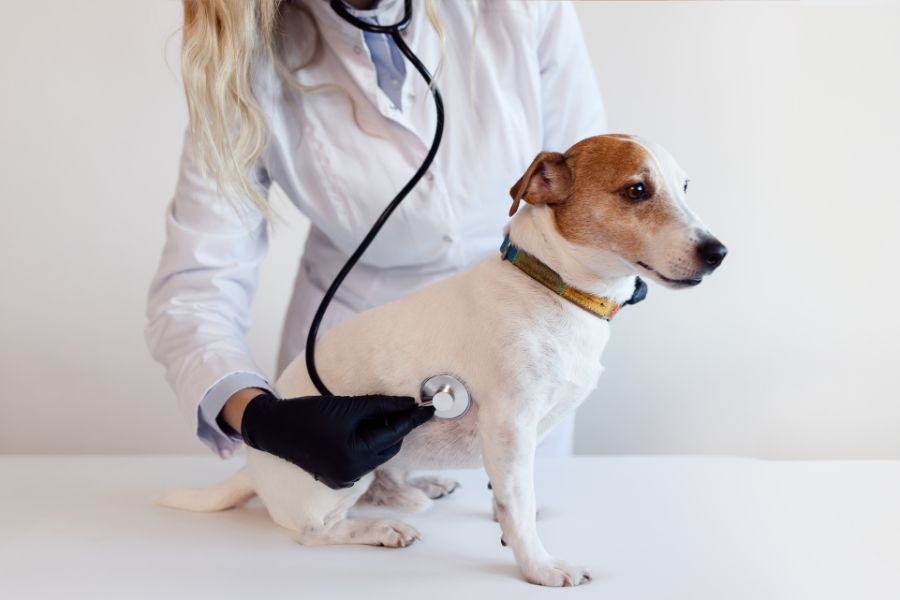
- Physical examination: The vet palpates the abdomen to check for bladder sensitivity or abnormal size. Pain or tension in the lower abdomen often indicates inflammation.
- Urinalysis: A urine sample is analyzed for white blood cells, red blood cells, bacteria, crystals, and pH levels. This is the foundational test for diagnosing a UTI.
- Urine culture and sensitivity testing: When an infection is confirmed, a culture identifies the specific bacteria responsible. Sensitivity testing shows which antibiotics will be most effective, preventing the use of medications that the bacteria can resist.
- Imaging: If the vet suspects bladder stones, structural abnormalities, or a recurring infection, X-rays or ultrasound may be ordered. Kyle Veterinary Hospital offers in-house veterinary ultrasound and diagnostic imaging, allowing for fast, accurate assessment without a referral delay.
- Bloodwork: For dogs with recurring UTIs or signs of kidney involvement, a blood panel helps evaluate kidney function and overall health.
Getting a urine sample at home before the appointment is helpful. Your vet will provide guidance on collection if needed.
UTI Treatment for Dogs and Prevention Tips
Once the diagnosis is confirmed, treatment is straightforward in most cases.
Treatment process:
The cornerstone of UTI treatment for dogs is a course of antibiotics prescribed based on the culture and sensitivity results. Your vet will determine the correct antibiotic type and duration based on your dog’s specific infection and health history. It is critical to complete the full course even if your dog seems to improve early. Stopping antibiotics prematurely allows surviving bacteria to repopulate and can contribute to antibiotic resistance.
Dogs with bladder stones, underlying disease, or recurrent infections may require additional treatment targeting those root causes alongside the antibiotics.
Prevention tips:
A common misconception is that UTIs are random and unavoidable. In reality, many infections can be reduced or prevented with consistent habits.
- Keep fresh water available at all times. Adequate hydration keeps urine diluted and flushes bacteria from the urinary tract more regularly.
- Maintain regular bathroom breaks. Dogs that hold urine for long periods give bacteria more opportunity to multiply. Aim for bathroom trips every 4 to 6 hours for adult dogs.
- Keep the genital area clean and dry. After outdoor time, gently wiping the area around the vulva or prepuce can reduce bacterial transfer.
- Address underlying health conditions. Managing diabetes or Cushing’s disease properly reduces the environment that allows a dog’s urinary tract infection to take hold repeatedly.
- Schedule routine wellness exams. Early detection of bladder crystals or stones can prevent chronic infection cycles before they start.
Dr. Rachel Wilson, a veterinarian at Kyle Veterinary Hospital in Cincinnati, emphasizes that recurring UTIs should never be dismissed as a normal pattern for your dog. In her experience, a second or third infection within a short period often signals an underlying condition that has not yet been identified, such as bladder stones, hormonal disease, or an anatomical factor. Dr. Wilson recommends urine cultures at each recurrence rather than repeating antibiotics on assumption, because targeting the exact bacterial strain makes treatment significantly more effective and helps protect your dog from developing antibiotic resistance over time.
Conclusion
A urinary tract infection is uncomfortable for your dog and stressful for you, but it is also one of the most treatable conditions in veterinary medicine when caught early. Recognizing UTI symptoms in dogs, acting quickly, and following your vet’s treatment plan fully will get your dog back to normal in most cases within a week to two weeks. Consistent hydration, clean hygiene habits, and regular wellness visits give your dog the best protection against future infections. If your dog is showing any signs of urinary discomfort, do not wait to see if it resolves on its own. Early evaluation leads to faster relief and simpler treatment. Book an appointment today.
Frequently Asked Questions
Q: How do I know if my dog has a UTI or something more serious?
Ans: UTI symptoms and more serious conditions like bladder stones or kidney infections can look similar. The only reliable way to tell the difference is through a urinalysis and, when needed, imaging. If your dog is straining to urinate, producing blood in the urine, or has had more than one infection in a short period, prompt veterinary evaluation is important to rule out underlying causes.
Q: Can a dog’s UTI go away on its own without treatment?
Ans: In rare mild cases, a dog’s immune system may suppress a minor infection temporarily, but UTIs do not reliably resolve without antibiotics. Untreated infections frequently worsen, spread to the kidneys, or become chronic. Veterinary treatment is always the recommended course of action.
Q: How long does it take for a dog to recover from a UTI?
Ans: Most dogs show noticeable improvement within 48 to 72 hours of starting antibiotics. A full course of treatment typically runs between 7 and 14 days, depending on the severity of the infection and the antibiotic prescribed. Follow-up urinalysis after treatment helps confirm the infection has fully cleared.
Q: Why does my dog keep getting UTIs?
Ans: Recurring UTIs often point to an underlying issue such as bladder stones, hormonal imbalance, diabetes, or an anatomical factor that makes your dog more vulnerable. Each recurrence warrants a urine culture to identify the specific bacteria involved and a broader diagnostic workup to find the root cause.
Q: What should I feed my dog to help prevent UTIs?
Ans: Increasing water intake is the most impactful dietary step. Wet food or adding water to dry food can help dogs who do not drink enough on their own. Some dogs benefit from veterinary prescription urinary diets, particularly those prone to bladder crystals or stones. Speak with your veterinarian about the best dietary approach for your dog’s specific history.