Hablamos Español

Your dog was fine yesterday. Today, they are holding up one leg and refusing to put weight on it. If you recently found a tick on your pet, that limp may not be a coincidence. A dog limping after tick bite exposure is one of the most commonly overlooked signs of Lyme disease and it can appear weeks after the bite itself. Many pet owners assume a limp means a sprain or a sore paw. But when ticks are involved, the cause often runs deeper. This article explains what Lyme disease does to a dog’s body, how to recognize it early, what a diagnosis looks like, and when to bring your dog in for care. Acting quickly makes a significant difference in how well and how fast your dog recovers.
Why a Tick Bite Can Make Your Dog Limp
Lyme disease is caused by a bacterium called Borrelia burgdorferi, transmitted through the bite of an infected black-legged tick, also known as a deer tick. When this bacterium enters a dog’s bloodstream, it can spread to the joints and trigger painful inflammation. That inflammation is what causes the limping.
What makes this condition tricky is timing. Most dogs do not show symptoms immediately. The limp typically appears two to five months after the initial bite, which means pet owners rarely connect the two events. Lyme disease in dogs affects the joints in a pattern called “shifting leg lameness” the limp may switch from one leg to another over days or weeks.
An estimated 95% of dogs exposed to Lyme disease never show clinical signs, but those that do can develop significant joint pain and systemic illness. Dogs in tick-heavy regions, including wooded areas and tall-grass environments, carry the highest exposure risk.
Tick Bite Symptoms for Dogs and Their Owners Often Miss
Lyme disease does not always announce itself with a single obvious sign. Tick-bite symptoms dogs display are often subtle at first and easy to dismiss as a pulled muscle or a rough play session.
Watch for these warning signs:
- Sudden limping or shifting leg lameness: The dog favors one leg, then another, over days or weeks. This shifting pattern is a hallmark of Lyme-related joint inflammation.
- Swollen or warm joints: Affected joints may feel puffy or warmer than normal to the touch, even without visible injury.
- Fever: A mild but persistent fever is common. Dogs may feel hot to the touch near the ears and paws.
- Fatigue and low energy: A dog that normally greets you at the door may seem reluctant to move or play.
- Loss of appetite: Reduced interest in food, especially when paired with lethargy, signals that something systemic is happening.
- Sensitivity to touch near the neck or back: Some dogs flinch or vocalize when touched around the spine or shoulders.
If you notice any of these signs, contact your veterinarian promptly. In our experience, dogs with Lyme disease often come in because their owners noticed an unusual limp that would not resolve on its own and no obvious injury explained it.
What Causes Lyme Disease in Dogs and Who Is Most at Risk
Lyme disease in dogs comes from a single source: the bite of an infected deer tick. However, not every tick bite leads to infection. Transmission generally requires a tick to remain attached for 36 to 48 hours. Ticks that are found and removed quickly are far less likely to cause disease.
Several factors increase a dog’s risk:
- Outdoor lifestyle: Dogs that hike, hunt, or spend time in wooded or grassy areas encounter ticks far more often than urban dogs.
- No tick prevention: Dogs without a current tick preventive are significantly more vulnerable to both tick attachment and infection.
- Geographic location: Tick populations are not uniform. In the Cincinnati, Ohio, region and throughout the Midwest and Northeast, deer tick activity peaks in spring and fall but ticks remain active any time temperatures stay above freezing.
- Long or dense coat: Dogs with thick coats can harbor attached ticks for longer periods without their owners noticing.
One misconception worth addressing: many pet owners believe that if they do not see a rash on their dog, Lyme disease is not possible. Dogs rarely develop the circular rash seen in humans. Absence of a rash does not rule out infection. The limp itself is often the first visible clue.
How Veterinarians Diagnose and Treat Canine Lyme Disease
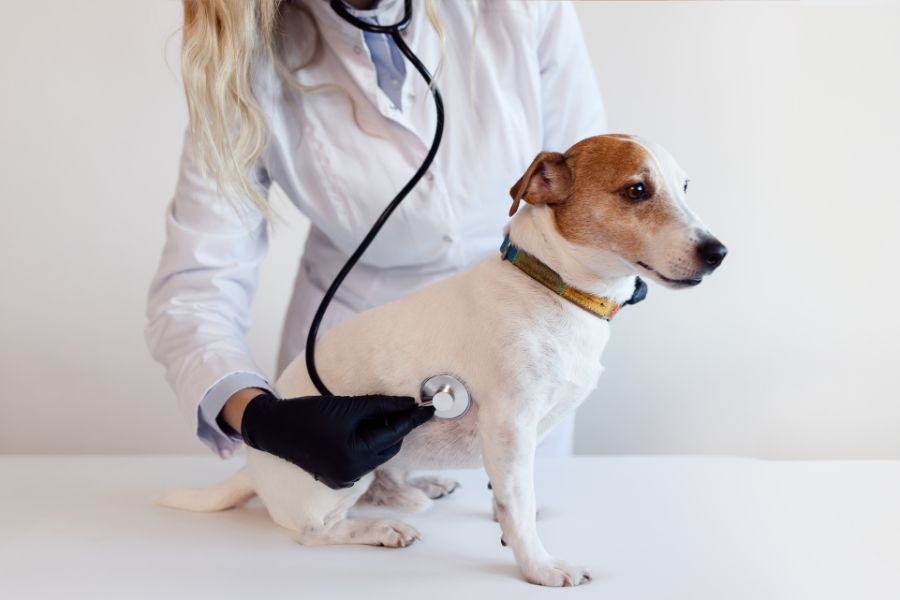
Canine Lyme disease diagnosis typically begins with a physical exam and a conversation about your dog’s tick exposure history. Your vet will look for joint swelling, test range of motion, and check for fever. From there, a blood test often done in-clinic within minutes can detect antibodies to Borrelia burgdorferi.
A positive result does not always mean active infection. Your vet will interpret the result alongside clinical signs to determine whether treatment is appropriate.
Here is what treatment generally looks like:
- Antibiotic therapy: Most dogs are treated with a course of antibiotics. Your vet will determine the appropriate medication and duration based on your dog’s size, weight, and overall health.
- Pain management: Dogs with significant joint pain may receive anti-inflammatory support. Never give your dog human pain medications without consulting your vet first.
- Rest and restricted activity: Inflamed joints heal better with reduced physical stress. Short, calm walks replace active play during recovery.
- Recheck testing: Some veterinarians recommend follow-up testing to confirm the infection has resolved, particularly if symptoms return.
- Kidney function monitoring: In rare cases, Lyme disease can affect the kidneys. Your vet may recommend a urinalysis or bloodwork to rule this out, especially in breeds with known sensitivity.
Most dogs respond well to treatment, especially when dog joint pain treatment begins early. Dogs treated promptly typically show improvement within days of starting antibiotics.
Preventing Tick Bites Before They Become a Problem
The most effective way to protect your dog from Lyme disease is prevention. A dog limping after tick bite exposure is a painful and preventable situation. Keeping ticks off your dog in the first place eliminates the risk entirely.
Practical prevention steps include:
- Use a veterinarian-recommended tick preventive year-round. Monthly topicals, oral chewables, and tick collars each work differently. Your vet can help you choose the best option for your dog’s lifestyle.
- Check your dog after every outdoor outing. Run your fingers through the coat, paying attention to the ears, groin, between the toes, and around the collar.
- Remove attached ticks promptly and correctly. Use fine-tipped tweezers, grasp the tick close to the skin, and pull upward with steady pressure. Do not twist or crush the tick.
- Ask your vet about Lyme vaccination. A canine Lyme vaccine is available and may be recommended for dogs with high tick exposure. Your vet will determine whether your dog is a good candidate.
- Keep grass trimmed and brush clear in your yard to reduce tick habitat near your home.
At Kyle Veterinary Hospital, our vet team provides comprehensive tick prevention guidance tailored to each dog’s lifestyle and risk level, including veterinary care planning for dogs that spend significant time outdoors.
Conclusion
A limp that appears days or weeks after a tick bite is not something to wait out. Lyme disease in dogs is treatable, but early intervention produces the best results. The signs of shifting leg lameness, joint swelling, fatigue, and fever are easy to miss until they become harder to ignore. If your dog has been exposed to ticks and is showing any of these symptoms, do not guess. Get them evaluated. Canine Lyme disease diagnosis is straightforward when done early, and dog joint pain treatment works best when started promptly. The sooner you act, the faster your dog gets back to doing what they love. Book an appointment today.
Frequently Asked Questions
Q: How long after a tick bite will a dog start limping?
Ans: Most dogs develop limping and other Lyme disease symptoms two to five months after the initial tick bite. The delay is why many owners do not immediately connect the limp to a past tick exposure.
Q: Can a dog get Lyme disease from a tick that was attached for only a few hours?
Ans: Transmission is much less likely with short attachment times. Research suggests ticks generally need to be attached for 36 to 48 hours to transmit Borrelia burgdorferi. Prompt tick removal significantly reduces infection risk.
Q: Does my dog need a Lyme test if I removed the tick quickly?
Ans: If you removed the tick well under 36 hours of attachment and your dog shows no symptoms, your vet may recommend monitoring rather than immediate testing. However, if your dog develops limping, fever, or lethargy in the weeks that follow, bring them in for evaluation regardless of how quickly the tick was removed.
Q: Can Lyme disease in dogs be cured completely?
Ans: Most dogs treated with antibiotics recover fully and return to normal activity. In some cases, antibody levels remain detectable on follow-up tests even after successful treatment. A small number of dogs may experience recurring joint issues. Lifelong tick prevention reduces the risk of reinfection.
Q: What tick prevention options are safest for my dog?
Ans: Several safe and effective options exist, including oral chewables, monthly topicals, and tick collars. The right choice depends on your dog’s size, age, health status, and how much time they spend outdoors. Your veterinarian is the best person to recommend a preventive that fits your dog’s specific needs.