Hablamos Español
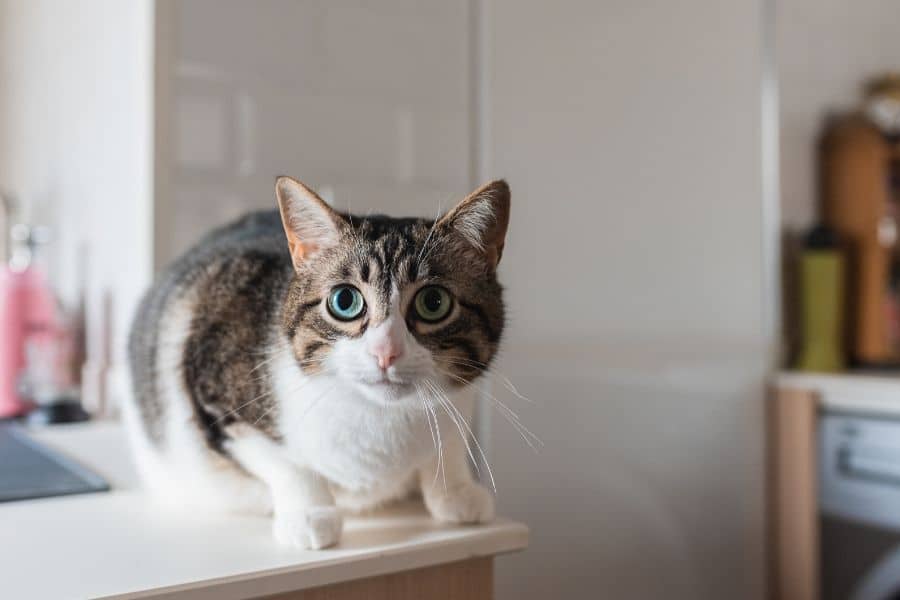
Every cat owner has had the experience of watching their cat do something strange and wondering: is this just my cat being weird, or is something wrong? Cats are famously idiosyncratic. They knock things off tables, stare at walls, sleep in bizarre positions, and develop highly specific preferences and routines that seem to make sense only to them. The challenge is that this natural baseline of feline eccentricity makes it harder to identify when a behavioral change is actually unusual in a medically significant way. A cat that suddenly starts hiding is either being typical or is communicating illness, and the difference is critical. This guide focuses specifically on distinguishing the behavioral changes in cats that are normal individual quirks from the ones that require veterinary evaluation and which of those require it urgently.
Is Cats’ Unusual Behavior New?
A cat who has always preferred solitude and occasionally hides in the back of a closet is being themselves. A cat who has been social for three years and suddenly begins hiding every day is showing a behavioral change. The behavior itself may be identical. What makes the second situation medically significant is its departure from the individual cat’s established pattern.
This distinction requires knowing your cat’s baseline, which comes from paying close attention over time. Cats that live with attentive owners who notice their daily routines have health advantages over cats whose habits go largely unobserved, because departures from routine are caught earlier.
If you cannot clearly answer whether a behavior is new, consider whether you would have noticed this behavior three months ago. If the honest answer is no, it is new enough to mention to your vet.
Behaviors That Are Definitely Just Your Cat
Before the list of concerning behavioral changes, a brief note on the behaviors that are genuinely just normal feline behavior, so you can set those aside confidently.
Chattering at birds through the window: Instinctual hunting behavior, not a neurological sign. Normal.
Bringing “gifts” (toys or prey) to owners: Social bonding behavior. Normal.
Knocking objects off surfaces: Attention-seeking and exploratory behavior. Normal unless it represents a change from prior behavior (a previously non-destructive cat becoming destructive).
Sitting and staring at walls or ceilings: Often responding to sounds, insects, or vibrations humans cannot detect. Occasional wall staring is normal. Continuous, compulsive staring with no apparent response to the environment is not.
Sudden bursts of energy and running (“zoomies”): Normal release of accumulated energy, most common in the evening. Normal unless accompanied by disorientation or distress.
Preferring one sleeping spot over another: Normal individual preference. Concerning if the preference change involves seeking cool tile rather than usual spots (a sign of fever) or moving to floor level when the cat previously slept in elevated spots (may indicate pain when jumping).
Unusual Behavior Changes That Require Veterinary Evaluation
Sudden onset continuous hiding: Different from an occasional quiet retreat. A cat that does not come out for meals, social interaction, or bathroom trips over 12 to 24 hours is isolating from illness or pain. Call your vet the same day.
Vocalizing excessively, especially at night: A cat that has become significantly noisier than their prior baseline, particularly with nighttime yowling or crying, may be showing hyperthyroidism (common in cats over 8), hypertension, cognitive dysfunction, or pain. This behavioral change in a previously quiet cat is not normal aging.
Stopping grooming: A cat whose coat is becoming unkempt, matted at the base of the tail, or generally less clean than usual has reduced energy and motivation for self-care. This is consistently associated with systemic illness, arthritis-related inflexibility, or depression following a significant life change.
Compulsive grooming to the point of hair loss: The opposite extreme of a cat that over-grooms certain body areas to baldness is managing chronic pain or stress in that area or experiencing a skin condition. Patterns of over-grooming on the abdomen or hind legs are often linked to gastrointestinal or urinary pain, respectively.
Aggression toward familiar household members without provocation: A gentle cat that begins hissing, swatting, or biting in situations that never produced this response before is protecting a painful location or experiencing neurological changes. This type of new-onset aggression requires the same-day evaluation it would receive from any family member who suddenly became violent without cause.
Litter box avoidance or significant change in litter box habits: Periuria urinating outside the box has both behavioral and medical causes, and a veterinarian needs to distinguish between them. In Cincinnati, OH winters, indoor cats spend significantly more time confined indoors, which can make stress-related litter box issues more apparent and can also reveal urinary conditions that were less noticeable with more active outdoor behavior.
Staring spells with no response to stimulation: A cat that goes “absent” stares blankly, does not respond to their name, seems unreachable for a period of seconds to minutes, and then returns to normal, may be experiencing focal seizures. These are brief, partial seizures that do not involve the whole-body convulsions most owners associate with the word “seizure.”
Pacing or inability to settle: A cat that repeatedly gets up and lies down, cannot find a comfortable position, paces the room, or seems restless in a way that is new and persistent is managing internal discomfort that makes rest difficult. This pattern is strongly associated with pain, nausea, and neurological discomfort.
How to Present Behavioral Observations to Your Vet
Behavioral changes are most diagnostically useful when you can describe them specifically. Your vet cannot observe the behavior at home; you are their only source of this information.
Before you call or come in, write down:
- What specifically changed (not “acting weird” describe the behavior precisely)
- When you first noticed it (even an approximate date)
- Whether it is getting progressively worse, staying the same, or intermittent
- Whether any other changes coincide (appetite, water intake, litter box, energy level)
- Any possible triggering events in the preceding two weeks
In Cincinnati, OH, where winter confinement means cats spend more time indoors from late fall through spring, behavioral changes that emerge in November or December may reflect seasonal stress, reduced stimulation, or the onset of conditions that were masking in summer’s higher activity level. Share this context with your vet.
When to Call Without Waiting
Kyle Veterinary Hospital is ready to evaluate unusual behavior changes in cats that concern you. Our team takes behavioral observations seriously as medical data and will build a thorough physical evaluation around what you have observed. Call us at 513-469-7654 if your cat has shown any of the behavioral changes described above as unusual, particularly if the change is sudden or if any physical symptoms accompany it.
For cats that are hiding and not eating for more than 24 hours, showing aggression that is completely new and severe, or displaying staring spells or balance problems, please call us today. We provide pet urgent care for cats showing behavioral warning signs and will help you determine the right level of response. Book an appointment today.
Frequently Asked Questions
Q: My cat is older and has become more vocal. Is this cognitive decline or something treatable?
Ans: Both are possible. Increased vocalization in senior cats is most commonly caused by hyperthyroidism, hypertension, and cognitive dysfunction syndrome. All three are diagnosable, and two of the three are highly treatable. Always have a senior cat with new-onset vocalization evaluated before attributing it to aging alone.
Q: My cat has been hiding more since we got a new pet. How do I know if this is stress or illness?
Ans: Stress-related hiding typically correlates directly with the introduction of the stressor and improves over days to weeks as the cat adjusts. Hiding that persists beyond two to three weeks after a new pet introduction or is combined with any physical symptoms warrants medical evaluation to rule out concurrent illness.
Q: Can pain cause a cat to stop using the litter box?
Ans: Yes. Arthritic cats find it painful to step over a high-sided litter box or to squat in the box for the time needed. Many periuria cases in senior cats are resolved by switching to a low-sided box placed on the floor rather than elevated. Your vet can assess whether arthritis is contributing.
Q: My cat seems disoriented but only briefly, then recovers. Should I still call?
Ans: Yes. Brief disorientation episodes that resolve are characteristic of partial seizures, transient ischemic events, or hypoglycemia. All of these require investigation even though the episode itself ends. Document the frequency, duration, and any accompanying signs and call your vet.
Q: At what age should behavioral changes in cats be taken most seriously?
Ans: All ages merit attention, but senior cats (defined as 10 years and older) have a higher rate of conditions that express through behavior: cognitive dysfunction, hyperthyroidism, hypertension, kidney disease, and cancer. In senior cats, no behavioral change should be attributed to “old age” without a veterinary exam.