
Hablamos Español
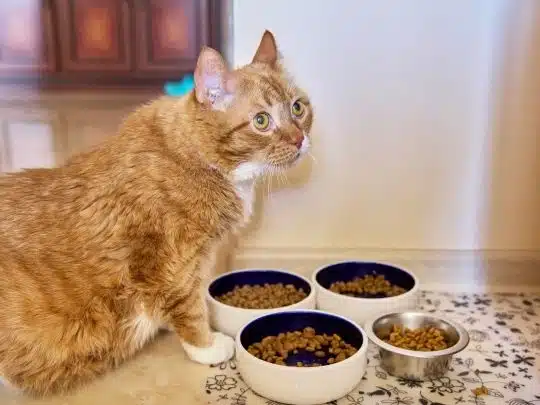
Standing in the pet food aisle with ten bags in front of you can feel overwhelming. Protein percentages, “grain-free” claims, and ingredient names you cannot pronounce it is a lot to decode. Understanding pet food labels explained in plain terms is exactly what this article is here to do. Whether you are feeding a dog, a cat, or both, knowing what is actually in that bag puts you in control of your pet’s health. We will break down every section of a pet food label ingredients, guaranteed analysis, nutritional adequacy statements, and more so you can shop with confidence and feed your pet well.
What a Pet Food Label Actually Tells You
Pet food labels explained simply: they are regulated documents, not marketing materials. In the United States, the Association of American Feed Control Officials (AAFCO) sets the standards that manufacturers must follow. Every label contains several mandatory sections, and each one carries specific meaning.
Here is what you will find on every compliant label:
- Product name — more meaningful than you think (see below)
- Net weight
- Manufacturer name and contact information
- Guaranteed analysis — minimum and maximum nutrient percentages
- Ingredient list — listed by weight, heaviest first
- Nutritional adequacy statement — confirms life stage suitability
- Feeding directions
The product name alone carries regulatory weight. If a label says “Salmon Cat Food,” salmon must make up at least 70% of the total product. If it says “Salmon Dinner” or “Salmon Formula,” salmon only needs to be 25% or more. A label reading “With Salmon” requires just 3% salmon content. These distinctions are not marketing tricks; they are codified rules.
Many pet owners assume that a longer ingredient list means better quality food. In reality, a shorter list of high-quality, identifiable ingredients is often a stronger sign of quality than a list of 40 items. When reading a label, focus on what the first five ingredients are those make up the bulk of what your pet is eating.
Decoding the Pet Food Ingredients List
The pet food ingredients list is organized by pre-cooking weight, heaviest ingredient first. This matters because ingredients with high water content, like fresh chicken or beef, naturally weigh more before processing. After cooking, that ingredient may rank much lower in actual dry-matter content.
Watch for these key patterns:
- Named protein sources come first — “Chicken,” “Lamb,” or “Salmon” listed first is a good sign. Vague terms like “meat meal” or “poultry by-product meal” are less transparent.
- Ingredient splitting — some manufacturers list the same ingredient multiple ways to push it lower on the list. For example: “corn,” “corn gluten meal,” and “corn flour” may each appear separately, but combined they could outweigh the protein source.
- Preservatives — natural preservatives like mixed tocopherols (vitamin E) and rosemary extract are preferable to artificial options like BHA, BHT, or ethoxyquin.
- Added vitamins and minerals — a long tail of vitamins at the bottom of the list is normal and necessary. This is how manufacturers ensure the food meets AAFCO nutrient profiles.
One observation from our veterinary practice: many pet owners focus entirely on the first ingredient and stop reading. The quality of ingredients five through ten often tells a more complete story about the food’s overall formulation. Take an extra minute to scan the full pet food ingredients list before committing to a brand.
In Cincinnati, OH, local climate and lifestyle can influence your pet’s caloric and nutritional needs. Active dogs spending time outdoors in summer heat may need higher hydration support, making moisture content on the label worth checking too.
Understanding Dog Food Nutrition Facts and the Guaranteed Analysis
The guaranteed analysis panel is the pet food equivalent of a nutrition facts label for humans. It lists four required values: minimum crude protein, minimum crude fat, maximum crude fiber, and maximum moisture.
Here is what those numbers mean in practice:
- Crude protein (minimum) — the total protein content before accounting for digestibility. A higher number does not automatically mean better quality; digestibility of the protein source matters equally.
- Crude fat (minimum) — fat is a primary energy source and supports coat health, brain function, and absorption of fat-soluble vitamins.
- Crude fiber (maximum) — fiber aids digestion. Lower fiber values are normal for most adult maintenance foods.
- Moisture (maximum) — wet foods typically show 75-82% moisture; dry kibble is usually 10% or less.
When comparing dog food nutrition facts across wet and dry foods, a direct comparison is misleading. A wet food showing 10% protein sounds low next to a dry food at 28%, but on a dry-matter basis they may be nearly equivalent. To compare accurately, subtract the moisture percentage from 100, then divide the nutrient percentage by that number. It sounds complex, but your veterinarian can walk you through it.
A commonly corrected misconception: higher protein is not always better, especially for senior dogs or pets with kidney concerns. Your veterinarian determines the right protein range for your specific pet based on age, breed, and health status.
How to Find the Best Food for Pets at Different Life Stages
The nutritional adequacy statement is one of the most overlooked sections on a label, yet it is arguably the most important. It tells you whether the food was formulated to meet AAFCO nutrient profiles for a specific life stage or tested through actual feeding trials.
Look for one of two statements:
- “Formulated to meet AAFCO nutrient profiles for [life stage]” — mathematically meets minimum nutrient requirements on paper
- “Animal feeding tests using AAFCO procedures substantiate that [product] provides complete and balanced nutrition for [life stage]” — tested in live animals, generally considered a stronger standard
Life stage categories are growth (puppies/kittens), adult maintenance, reproduction, and all life stages. “All life stages” formulas are nutritionally denser and are often the best food for pets during puppyhood or pregnancy but may be excessive for a sedentary adult pet.
If you are unsure which life stage category applies to your pet’s current phase of life, asking your veterinarian at the next wellness visit is the fastest way to get a confident answer. This is especially important for large-breed puppies, whose growth nutrition requirements differ significantly from small breeds.
Reading Between the Lines on Marketing Claims
Marketing language on pet food packaging is not regulated the same way that label content is. Words like “natural,” “holistic,” “premium,” and “human-grade” have no standardized legal definition in pet food. They are designed to appeal to you, not to describe the food’s nutritional quality.
Here is how to read pet food claims critically:
- “Grain-free” is not automatically healthier. Grains replaced with legumes like peas and lentils have been under investigation for a possible link to certain heart conditions in dogs. The research is ongoing, but this is worth discussing with your vet before committing to a grain-free diet long-term.
- “No artificial preservatives” refers only to preservatives added during manufacturing. Ingredients themselves may have been preserved before arriving at the plant.
- “Vet recommended” without a named organization or verifiable study is an unverifiable claim. Seek brands that publish feeding trial results or are transparent about their nutritional research.
Estimated figures suggest that well over 80% of pet owners report relying on front-of-bag claims when choosing pet food, while fewer than 30% regularly read the ingredient list or guaranteed analysis panel. Flipping the bag over and spending 60 seconds on the back label is one of the simplest ways to make a more informed choice.
For pet owners in Cincinnati, OH, Kyle Veterinary Hospital offers nutrition consultations as part of routine wellness care. If a specific brand, ingredient concern, or diet transition is on your mind, bring the bag to your appointment. Our team reviews labels alongside your pet’s health history to give you a grounded, personalized recommendation.
Conclusion
Knowing how to read a pet food label is one of the most practical skills a pet owner can develop. From the ingredient list to the guaranteed analysis to the nutritional adequacy statement, each section carries real information that affects your pet’s health every single day. Pet food labels explained clearly puts you in the driver’s seat, not the marketing department. Start with the ingredient list, check the adequacy statement, and do not let front-of-bag language drive your decision. Your pet eats that food every meal, every day. That decision deserves a second look. Kyle Veterinary Hospital is here to support you with expert veterinary care and nutrition guidance whenever you need it. Book an appointment today.
Frequently Asked Questions
Q: What does “complete and balanced” mean on a pet food label?
Ans: “Complete and balanced” means the food meets the minimum nutrient requirements established by AAFCO for a specific life stage. It contains all the proteins, fats, vitamins, and minerals your pet needs as a sole diet source, without requiring supplements.
Q: Is the first ingredient on a pet food label the most important?
Ans: The first ingredient is the heaviest by pre-cooking weight, which makes it significant, but it is not the whole picture. Scan the first five ingredients together for a clearer view of what makes up the bulk of the food, and watch for ingredient splitting that can inflate a lower-quality food’s appearance.
Q: What is the difference between “crude protein” and actual usable protein?
Ans: Crude protein is a chemical measurement of total nitrogen in the food, which estimates protein content. It does not measure digestibility. A food can show high crude protein but deliver less usable protein if the sources are poorly digestible. The quality and source of protein matter as much as the percentage listed.
Q: Should I choose a food that was feeding-trial tested or just formulated to AAFCO profiles?
Ans: Feeding-trial-tested foods have been assessed in live animals and are generally considered a stronger standard. Formulated foods meet nutrient profiles mathematically but have not been live-tested. For pets with health concerns or at critical life stages like puppyhood, a feeding-trial-tested food is often the better choice.
Q: How do I compare wet food and dry food nutrition if the percentages look so different?
Ans: Use the dry-matter basis calculation. Subtract the moisture percentage from 100 to get the dry matter percentage, then divide the nutrient percentage by that number. This removes the water content from the equation and gives you a comparable figure. Your veterinarian can help you run these numbers if the math feels confusing.